The Era of Intelligent Simplicity: Temperature and Time Monitoring in 2026
The application of time and temperature indicators - tools that reveal whether a product has experienced unacceptable temperature or time exposure - is projected to grow substantially over the coming decade. This growth is fuelled by heightened regulatory scrutiny, especially in cold chains for pharmaceuticals and vaccines, rising e-commerce logistics, and integration with digital platforms.
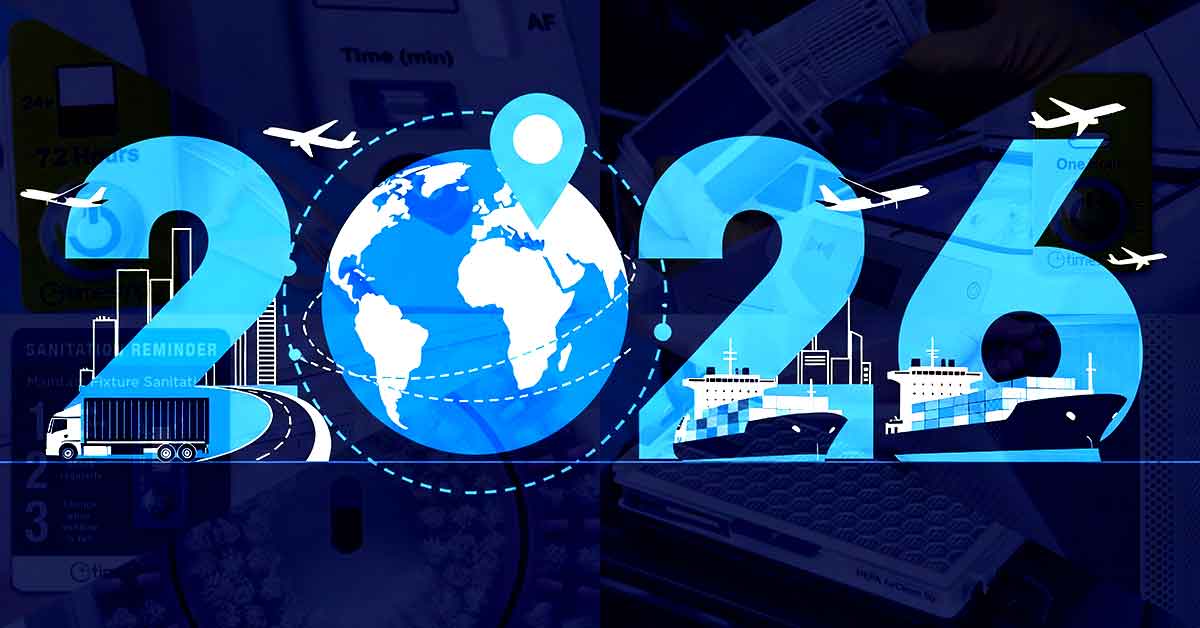
As we move into 2026, the world of indicator technology has evolved from passive labels into active, ‘intelligent’ participants in the global supply chain. 2026 is the year where predictive maintenance and sustainability could become the industry standard.
Here we explore the pivotal trends shaping the next 12 months, moving beyond simple temperature tracking to encompass a wider array of life-cycle monitoring applications.
Monitoring Indicator Innovation and Sustainability
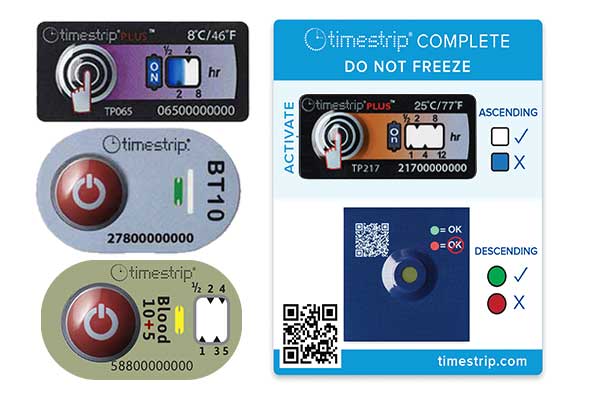
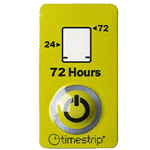
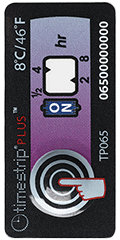
Temperature indicators and monitoring technologies are evolving rapidly, driven by digital innovation, sustainability demands and expanding application needs across industries. From simple visual indicators like Timestrip’s range of fluid-based and electronic indicators, to complex systems that feed real-time analytics into enterprise platforms, the landscape of temperature monitoring is becoming smarter, more connected and more widely deployed than ever before.
Newer indicators offer chemical or electronic technologies (such as the Timestrip neo range of smart labels), enabling more accurate, traceable and cost-effective monitoring of sensitive goods. Smart indicators that incorporate connectivity such as QR codes are becoming standard tools for visibility throughout supply chains.
Temperature indicators are increasingly adopted to reduce waste, particularly in food and pharma cold chains. Meanwhile, miniaturization is enabling smaller, lower power, and more accurate sensors that can be embedded into packaging or remote environments with minimal footprint.

Beyond Reaction: The Rise of Predictive Cold Chains
In 2025, the industry focused on detecting excursions. In 2026, the focus should shift to preventing them.
- AI-Enhanced Indicators: Modern indicators are no longer just visual cues; they are data nodes. By pairing QR-enabled visual labels with AI-driven cloud platforms, companies are able to build models of their shipments. This allows logistics managers to predict which routes are likely to cause a temperature breach before the package even leaves the warehouse, based on historical weather patterns and sensor data.
- The ‘Invisible Maintenance’ Revolution – Time-Based Monitoring: A significant trend for 2026 is the expansion of one-time monitoring into preventative maintenance at the consumer and industrial levels. Timestrip time indicators are increasingly being used to solve the ‘forgetfulness gap’ in essential service cycles.
- New technologies: By 2026, temperature indicator technology is likely to reflect a blend of low-cost, user-friendly sensors like those in the Timestrip family with high-precision, connected monitoring systems that feed into enterprise infrastructure. Sustainability and miniaturization will continue to shape product design, while real-time data and predictive analytics will expand temperature monitoring into new domains — from logistics and manufacturing to building systems and consumer products. In practice, this means a world where both simple visual indicators and complex sensor networks work in concert to ensure safety, compliance, and performance in environments that depend on precise thermal conditions.
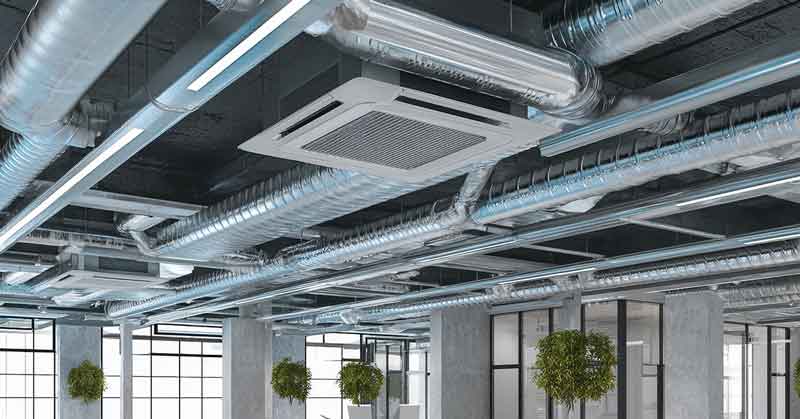
- Filter Replacement Indicators: From high-end HVAC systems to consumer water systems, disposable time indicators are now becoming standard. These small, adhesive labels are activated upon installation and show exactly when a filter's effective life has ended.
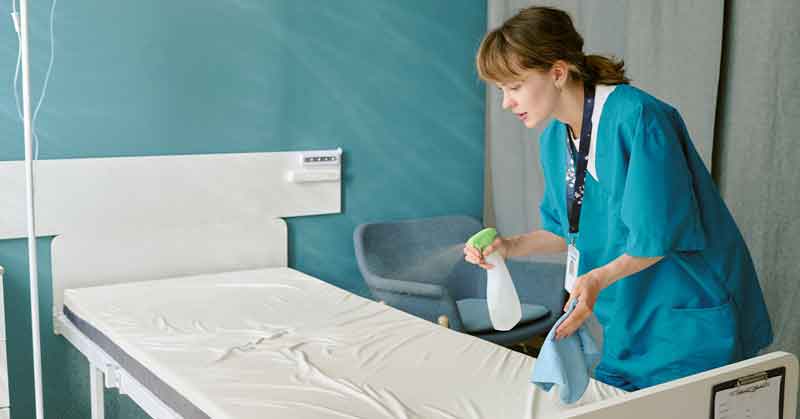
- Medical Consumables: In clinical settings, time indicators are now integrated into items with fixed life-spans or replacement schedules, such as hospital privacy curtains, cannulas and catheters. This ‘visual countdown’ ensures that replacements can occur on a strict clinical schedule, reducing the risk of healthcare-acquired infections (HAIs).
- Sterilization Verification: In 2026, time-sensitive labels ensure prompt processing of medical instruments and devices requiring disinfection and sterilization as required for complete effectiveness. Technicians utilize Timestrip one-hour time indicators to prevent equipment from being left unprocessed too long, prompting timely processing.
Key Takeaway of Time and Temperature Monitoring in 2026
Temperature indicator tech is moving toward smarter, connected, and more sustainable solutions by 2026. Growth is driven by cold chain needs, IoT integration, and new applications like filter replacement monitoring that combine time and environmental data for better maintenance and performance.
In 2026, an indicator is no longer just a label; it is a commitment to safety, efficiency, and environmental stewardship.