The Real Cost of Blood Wastage — and How Temperature Indicators Help Prevent It
Every unit of blood represents more than a valuable medical resource. It represents a donation, processing, testing, storage, transportation and handling — all undertaken so that blood is available when a patient needs it.
When a blood unit has been exposed to an uncertain temperature history, however, healthcare staff can face a difficult decision: can it safely be returned to controlled storage, or must it be discarded?
When there is no reliable way to answer that question, the safest option may be to discard the unit. But the consequences of blood wastage extend well beyond the cost of the product itself.
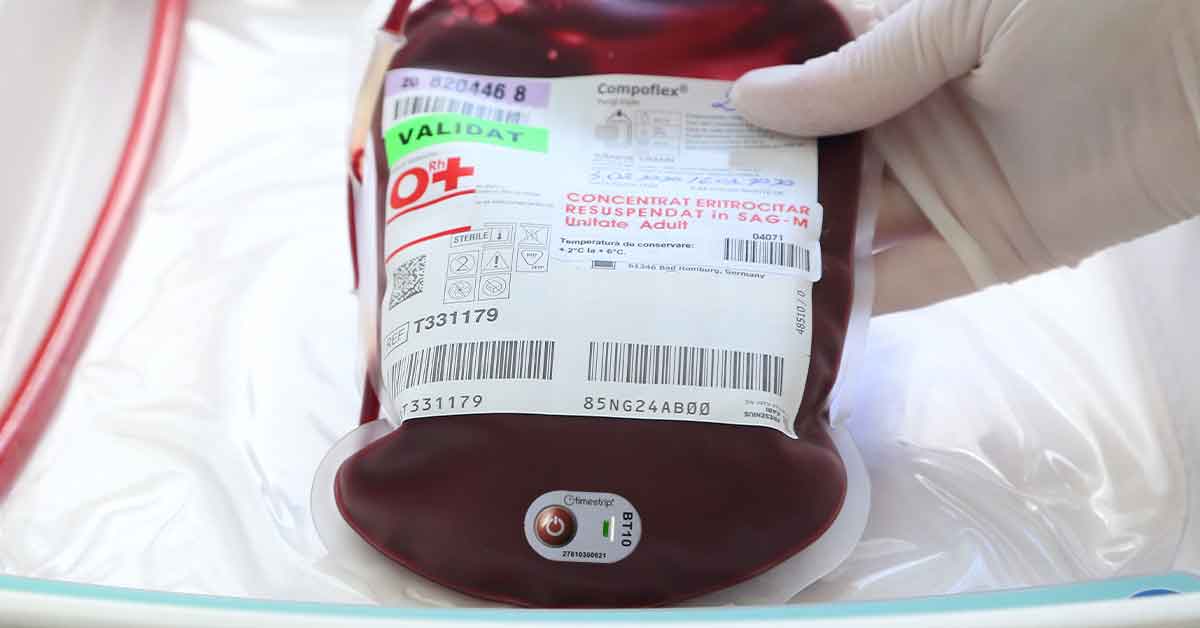
A Timestrip BT10 indicator applied to a blood bag
The Hidden Cost of Discarded Blood
Blood is a finite resource. Donated blood must be carefully collected, tested, processed and stored before it reaches a hospital, clinic or other point of care.
A unit that is discarded because its temperature history is unknown therefore represents a loss at several levels.
There is the direct blood wastage cost associated with replacing the unit. There are also the costs of collection, processing, laboratory testing, storage, transportation and administration. And, importantly, there is the opportunity cost of having one fewer unit available for a patient.
For healthcare providers operating under pressure to manage resources efficiently, reducing avoidable wastage can make a meaningful difference. The challenge is particularly relevant when blood units temporarily leave controlled storage. Units may be transported between departments, taken to operating theatres, prepared for procedures or issued for transfusion but subsequently returned unused. If staff cannot establish how long a unit has been outside the required temperature range, returning it to stock may not be possible.
When Uncertainty Leads to Unnecessary Blood Discard
Blood storage requirements are tightly controlled because temperature can affect the quality and safety of blood components.
But knowing that a unit has been outside a refrigerator is not necessarily enough to determine whether it has actually experienced a damaging temperature excursion. Consider a unit that has been removed from controlled storage and taken to a clinical area. The procedure is cancelled, and the unit is returned. If there is no clear record of the unit’s temperature exposure, staff may have no practical way of knowing whether it remained within acceptable limits throughout the period. The result can be a conservative decision to discard the unit.
Turning Uncertainty into Visible Temperature Evidence
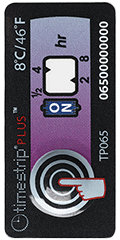
A simple visual temperature indicator can provide an important missing piece of information. Instead of relying solely on the time a unit has been outside refrigeration, or on assumptions about the surrounding temperature, a simple temperature indicator can provide a visual record of whether the blood has experienced a specified temperature condition.
Timestrip visual temperature indicators are designed to make temperature exposure immediately visible. Where the indicator shows that the specified temperature limit has not been breached, staff have an objective visual reference that can support the decision to return the unit to controlled storage, subject to the healthcare organisation’s procedures and applicable regulations. If an unacceptable temperature exposure has occurred, the indicator provides a clear warning that the unit requires appropriate action.
The key benefit is therefore not simply temperature monitoring. It is decision-making based on visible temperature history.
Supporting Blood Storage Return to Stock
For blood banks and clinical teams, the ability to confidently identify unaffected units can help reduce unnecessary wastage.
A typical process might look like this:
Blood unit removed from controlled storage → transported or issued for clinical use → procedure completed or cancelled → unit assessed before return → visual temperature indicator checked → unaffected unit returned to stock, where permitted.
Without an indicator, the final decision may depend on incomplete information.
With a suitable visual indicator, staff have an additional piece of evidence about the unit’s temperature exposure. This can help distinguish between a known temperature exposure, where the unit has exceeded the relevant temperature limit and should be handled according to established procedures, and ‘no indicated temperature excursion’. Here, the indicator shows that the specified temperature condition has not been exceeded, providing evidence that can support blood storage return to stock, where permitted by the relevant procedures.
Timestrip BT10: A Small Indicator, A Significant Impact
Reducing blood wastage does not necessarily require a complex electronic monitoring system. A simple visual temperature indicator such as Timestrip’s BT10 can provide a simple, decentralised way of monitoring individual units. Because the status can be seen directly, staff do not need to access software, download data or interpret a graph to establish whether a temperature event has occurred. That simplicity matters in busy clinical environments.

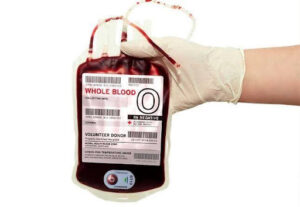
Activating a Timestrip BT10 indicator on a blood bag
And because the indicator travels with the blood unit, its temperature history remains associated with the individual unit rather than relying entirely on the temperature history of a refrigerator, transport container or room, where temperature gradients can occur.
Reducing Blood Waste While Protecting Patients
The goal of temperature monitoring is not to prevent every unit from being discarded. If a blood component has experienced an unacceptable temperature excursion, appropriate safety procedures must take priority. However, effective local monitoring can ensure that a valuable resource is not discarded when there is evidence that it has remained within the required temperature conditions.
Making Every Blood Unit Count
Blood wastage is more than a financial issue. Every discarded unit represents a resource that has been donated for the benefit of patients and may be urgently needed elsewhere. Temperature indicators offer a straightforward way to improve visibility of temperature exposure at the point where decisions are made.
By providing a clear visual indication of whether a specified temperature threshold has been exceeded, Timestrip temperature and time indicators can help healthcare staff make more informed decisions about individual blood units, including whether an unaffected unit can be returned to controlled storage.
In a healthcare system where every donation matters, reducing uncertainty can be a simple but valuable step towards reducing waste.
Note: Blood Temp 10 is an FDA 510(k) Medical Device.
| VIEW BLOOD TEMP RANGE |
| CONTACT US |