
Hospital Curtain Compliance: A Hidden Infection Control Risk
Hospital privacy curtains are an essential part of the patient environment, providing privacy and dignity in wards, treatment rooms, emergency departments and clinical areas. Yet they can also represent an easily overlooked infection control risk.
Frequently touched by healthcare workers, patients and visitors, curtains can become contaminated with microorganisms over time. In the UK, NHS guidance recognises the importance of managing curtains appropriately, while individual healthcare organisations establish cleaning and replacement schedules according to local risk assessments and infection prevention and control (IPC) requirements.
Research has demonstrated that hospital privacy curtains can become contaminated with healthcare-associated pathogens, including organisms such as MRSA and C. difficile. NHS Health Building Note 00-10 Part E specifically notes that hospital privacy curtains can become contaminated with healthcare-associated pathogens that can be acquired on hands (Ref 1). This makes hospital curtain replacement an important part of an effective environmental hygiene programme.
The risk is particularly relevant in busy clinical environments where curtains are frequently moved or touched and where there is high patient turnover. Curtains may also require replacement sooner than the routine schedule if they become visibly soiled, damaged or exposed to a patient with an infection requiring additional precautions.
What Are the NHS Standards for Hospital Curtain Changes?
There is not one universal curtain replacement interval that applies to every healthcare environment. Instead, healthcare organisations need clear, documented cleaning responsibilities, schedules and frequencies that reflect the risk associated with different clinical areas.
The NHS National Standards of Healthcare Cleanliness 2025 require healthcare organisations to establish local cleaning responsibility frameworks and cleaning specifications, including defined cleaning frequencies. The frequency should reflect the functional risk category of the area, with additional measures available where infection prevention and control circumstances require them (Ref 2).
For curtains specifically, NHS materials and local NHS policies commonly use a six-month interval in appropriate clinical settings. For example, an NHS England cleanliness charter specifies curtains and blinds according to local protocol, with a six-month minimum in the relevant primary-care framework (Ref 3).
The practical requirements therefore typically include:
- Routine replacement according to the healthcare organisation's documented schedule.
- Clear responsibility for identifying curtains that are due for replacement.
- Evidence that the required schedule is being followed. This is particularly important; a policy is only effective if staff can easily identify which curtains are due for replacement.
- Earlier replacement when curtains are visibly soiled or damaged, or where required by local IPC procedures, patient risk or an outbreak.
The Problem With Relying on Memory for Curtain Replacement
A curtain may have been installed months earlier, but unless the installation date is recorded and readily visible, staff may have no simple way of knowing whether it is still within its approved service period. Paper records, spreadsheets and maintenance systems can provide an audit trail, but they require staff to enter information and then check it. That creates opportunities for missed dates, incomplete records and delays. A simple visual indicator can provide an additional layer of control.
Making Curtain Change Compliance Visible
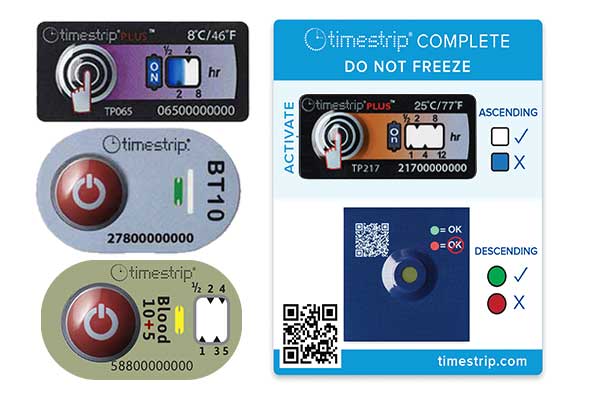
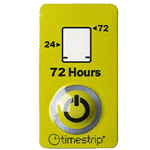
Timestrip Time indicators provide a simple visual method of monitoring the elapsed time since a curtain was installed.
The indicator is activated when the curtain is put into service. It then progressively changes colour as time passes. When the specified period has elapsed, the visual indication provides an immediate reminder that the curtain is due for replacement — a similar approach to Timestrip's work on hospital sterilization practices, where visible, time-based indicators help turn an invisible deadline into a visible one.
For example, where a hospital's local IPC policy specifies a six-month replacement schedule, a six-month Timestrip indicator can be incorporated into the curtain or its associated reminder system. Staff can see at a glance whether the curtain is within its scheduled period or requires attention. This approach reflects ICP Medical's Rapid Refresh™ curtain programme, which added Timestrip Time indicators to its curtains so staff could see at a glance when a change was due.
This can help support curtain change compliance without requiring staff to remember installation dates or repeatedly consult a separate database.
What About AABB Compliance for Curtain Replacement?
AABB develops quality and technical standards for blood banks, transfusion services and other blood and biotherapies activities. While AABB standards do not specify a particular hospital curtain replacement interval, the same principle of defined, documented and monitored processes is highly relevant to environments operating under AABB quality systems.
Where a healthcare or laboratory organisation has established a defined replacement or maintenance interval for environmental or other controlled items, a visual elapsed-time indicator can provide a practical reminder that helps staff follow the organisation's documented procedure.
In other words, Timestrip indicators can support the management and visibility of scheduled tasks, while the applicable NHS, AABB or local organisational requirements determine what that schedule should be.
From Compliance Paperwork to Visible Control
Effective infection prevention depends on many individual actions being carried out consistently.
Curtain replacement may appear relatively minor compared with hand hygiene, equipment decontamination or environmental cleaning. But curtains are part of the patient environment and can become contaminated through frequent handling. The value of a time indicator is therefore that it makes a scheduled action visible, immediate and difficult to overlook.
For facilities and IPC teams, that can mean:
- Easier identification of curtains approaching replacement.
- Less reliance on memory or manual date checking.
- A simple visual prompt for cleaning and facilities staff.
- Better consistency across wards and clinical areas.
- Support for documented replacement schedules.
- A practical aid during internal compliance checks and audits.
A Small Indicator Supporting a Bigger Infection Control Programme
The latest NHS cleanliness standards (Ref 2) emphasise clear responsibilities, documented cleaning specifications, appropriate frequencies, governance and audit. For hospitals using disposable or launderable privacy curtains, having a clearly defined hospital curtain replacement programme is one part of this wider approach to environmental hygiene.
Timestrip Time indicators provide a straightforward way to make the passage of time visible. By integrating a time indicator into a curtain or its replacement process, healthcare teams can see when the scheduled change point has been reached — helping turn a written policy into a practical, everyday reminder.
Timestrip Time: making scheduled healthcare replacement visible, simple and actionable.
| VIEW TIME INDICATORS |
| CONTACT US |