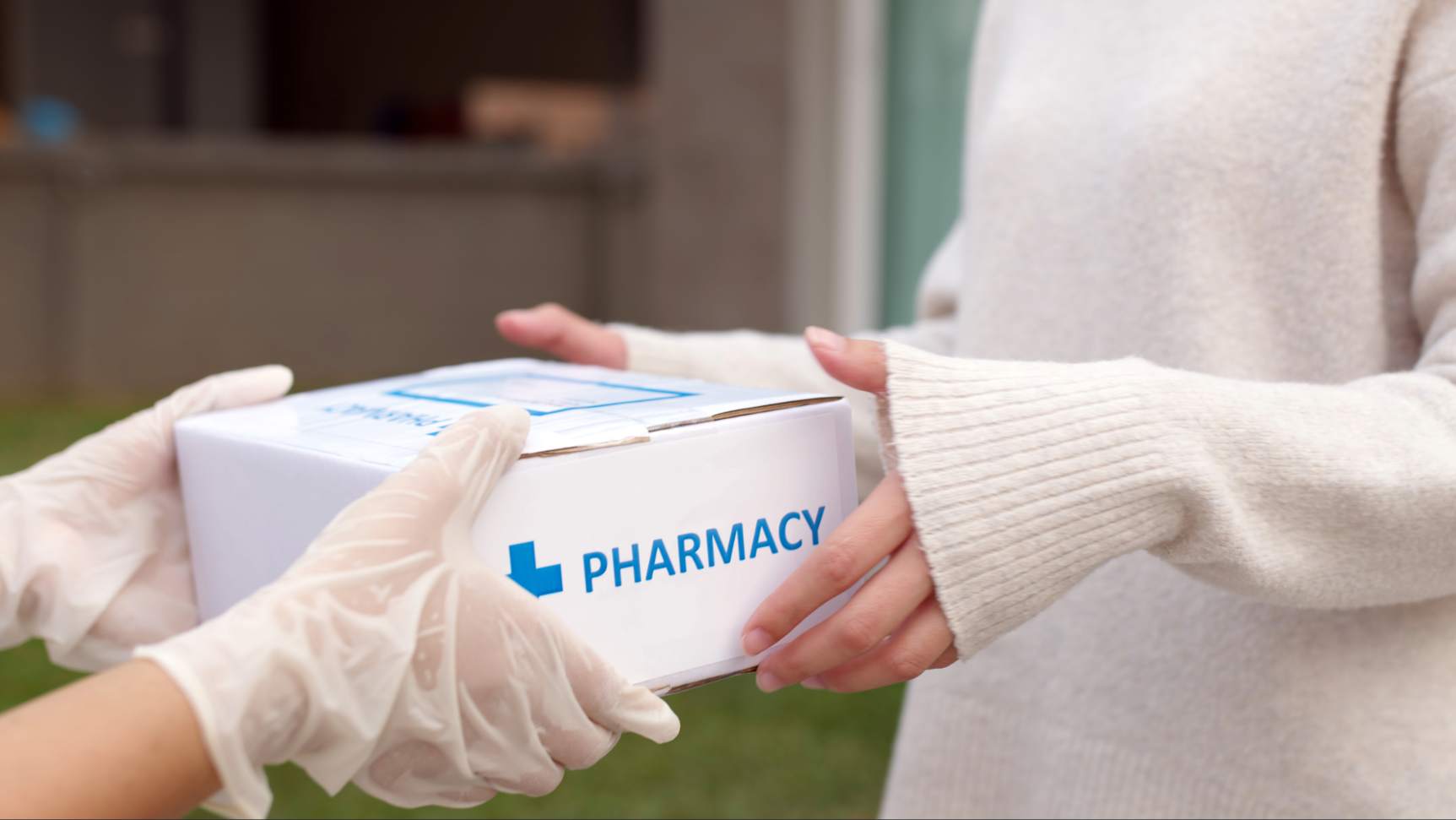
Temperature Indicators for Home-Delivered Pharmaceuticals: Protecting the Last Mile of the Cold Chain
Home delivery of pharmaceuticals has evolved from a niche convenience into a globally established component of modern healthcare, driven by the rise of e-pharmacies, the integration of digital health and increasing consumer demand for accessible care.
The practice is now prevalent across much of the developed world, with significant adoption in Europe and North America. The U.S. has a highly developed infrastructure for home delivery, driven by large "mail-order" pharmacies, specialty pharmacies for chronic conditions, and the entry of major tech-driven players such as Amazon Pharmacy. The convenience of home delivery is a standard expectation for many patients, especially those on recurring maintenance medications.
However, this shift in the supply chain brings a unique challenge in the ‘last mile’ of delivery. Unlike controlled hospital or pharmacy environments, home delivery exposes sensitive medications to unpredictable variables, including fluctuating ambient temperatures during transit and the delay between package arrival and receipt by the patient.
For temperature-sensitive drugs such as vaccines, biologics, and GLP-1 receptor agonists, even brief excursions outside of their required storage range (typically 2°C to 8°C) can compromise their chemical stability. This risks reducing efficacy or, in severe cases, rendering the medication unsafe. To mitigate these risks and ensure patient safety, healthcare professionals and logistics providers are increasingly relying on simple yet highly effective technology: temperature indicators.
Why Temperature Excursions Are the Hidden Danger of Pharmaceutical Home Delivery
Pharmaceutical products are meticulously engineered to maintain potency under specific environmental conditions. When a medication is shipped, it is packed in validated insulated packaging designed to maintain its internal temperature for a specific duration. Yet external factors such as extreme weather conditions, unexpected transit delays or a package being left on a sunny porch, can push the internal temperature beyond safe limits.
The danger is often invisible. A medication may look physically unchanged even if its molecular structure has been degraded by heat or freezing. This creates a dangerous uncertainty: Has the product remained effective, or is it compromised? For a patient relying on regular reliable deliveries, this uncertainty is unacceptable.
How Temperature Indicators Protect Temperature-Sensitive Medications in Transit
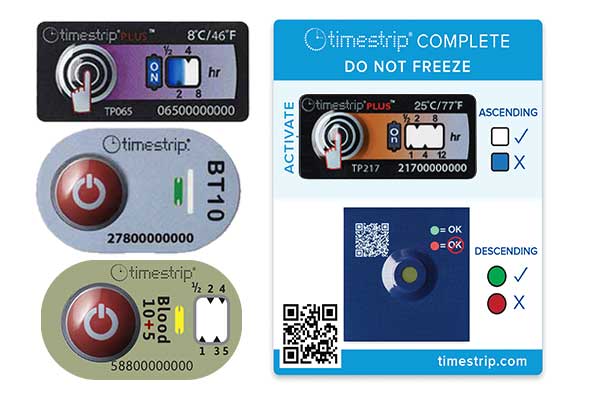
Temperature indicators, such as the Timestrip® range, offer a practical, cost-effective solution to this ‘last-mile’ uncertainty. These small, self-adhesive devices are attached directly to the pharmaceutical packaging or the inner container. They serve as a constant reliable guardian of the product's thermal history.
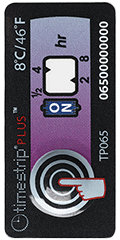
Unlike complex electronic data loggers that may require specialized equipment to download and interpret data, these indicators are designed for instant, intuitive use. They typically function through simple, irreversible chemical processes. Once activated by a user, often via a simple squeeze of an activation button, they begin monitoring the temperature. If the temperature exceeds a defined threshold (such as 8°C), the indicator provides a clear, irreversible visual signal, often changing color (e.g. from white to blue).
Crucially, many advanced indicators also record the duration of the breach. This is essential because the impact of a temperature excursion is often cumulative. A brief, minor spike might be manageable, while a sustained excursion over several hours indicates a high risk that the product has been compromised.
Temperature Monitoring Benefits for Pharmacists, Clinicians, and Patients
The deployment of temperature indicators provides significant benefits across the healthcare ecosystem:
- For Healthcare Professionals: Indicators provide objective evidence that a shipment remained within the required parameters. This simplifies quality assurance and ensures that clinicians can confidently prescribe medications knowing they haven't been subjected to undisclosed temperature excursions.
- For Pharmacists: By including an indicator in a shipment, the pharmacist gains a transparent record of the delivery's success. It eliminates the guessing game when a patient calls with concerns about a delivery that was delayed in transit or left in a hot mailbox.
- For Patients: Perhaps most importantly, the patient receives clear, actionable information. Upon receiving their medication, a patient or their caregiver can immediately check the indicator. If the indicator remains in the "safe" state, they have visual confirmation that their medication is suitable for use. If it signals a breach, they have clear guidance to contact their pharmacy rather than administering a potentially compromised dose.
Temperature Indicators: Standard Practice for the Future of Pharmaceutical Home Delivery
As the trend toward home delivery continues, the integration of temperature monitoring is becoming standard practice rather than an optional add-on. Whether it is ensuring the integrity of complex biologics or maintaining the stability of temperature-sensitive GLP-1 formulations, these devices bridge the gap between the controlled storage of the pharmacy and the realities of the patient's doorstep.
By investing in simple, reliable, and user-friendly temperature indicators, the healthcare industry is doing more than just meeting regulatory compliance standards. It is fostering a culture of transparency and safety, providing both healthcare providers and patients with the essential peace of mind that their treatments are as effective as they were intended to be when they left the manufacturing line.