Winter Planning Starts Now: Protecting Food and Beverages from the Risk of Freezing
As winter approaches in many regions of the world, food and beverage suppliers start thinking about more than keeping products cool. Falling temperatures can present an equally serious challenge, particularly when goods are transported, stored or distributed during periods of frost and sub-zero weather.
While much of the food supply chain focuses on maintaining minimum refrigeration temperatures, some products can be damaged if temperatures fall too low. Fresh fruit and vegetables, wine, beverages and other temperature-sensitive goods may suffer freezing or chilling damage, affecting their appearance, quality, shelf life and ultimately their suitability for sale.
For suppliers, distributors and retailers, the consequences can include rejected deliveries, wasted stock, financial losses and damage to customer relationships. The difficulty is that exposure to excessively low temperatures may occur at any point in the supply chain, often without being immediately apparent.
The Hidden Risks of Winter Food and Beverage Distribution
During winter, temperature-controlled transport and storage facilities can face additional pressures. Overnight deliveries, loading bays, temporary storage areas and poorly insulated vehicles can all create opportunities for temperatures to fall below acceptable levels.
The risks are not limited to products that visibly freeze. Certain fruit and vegetables, for example, are vulnerable to chilling injury at temperatures above freezing. The resulting damage may not become apparent until products reach retail shelves or are subsequently handled by consumers. Wine and other bottled beverages can also be affected by excessively low temperatures, while other food-related materials may have their own minimum storage requirements.
The challenge for suppliers is knowing whether goods have experienced an unacceptable temperature drop, rather than simply assuming that the transport and storage environment has remained within specification.
How Timestrip Indicators Give Early Warning of Freezing Damage
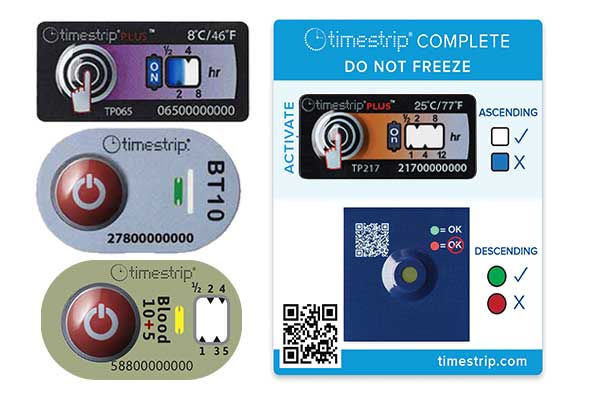
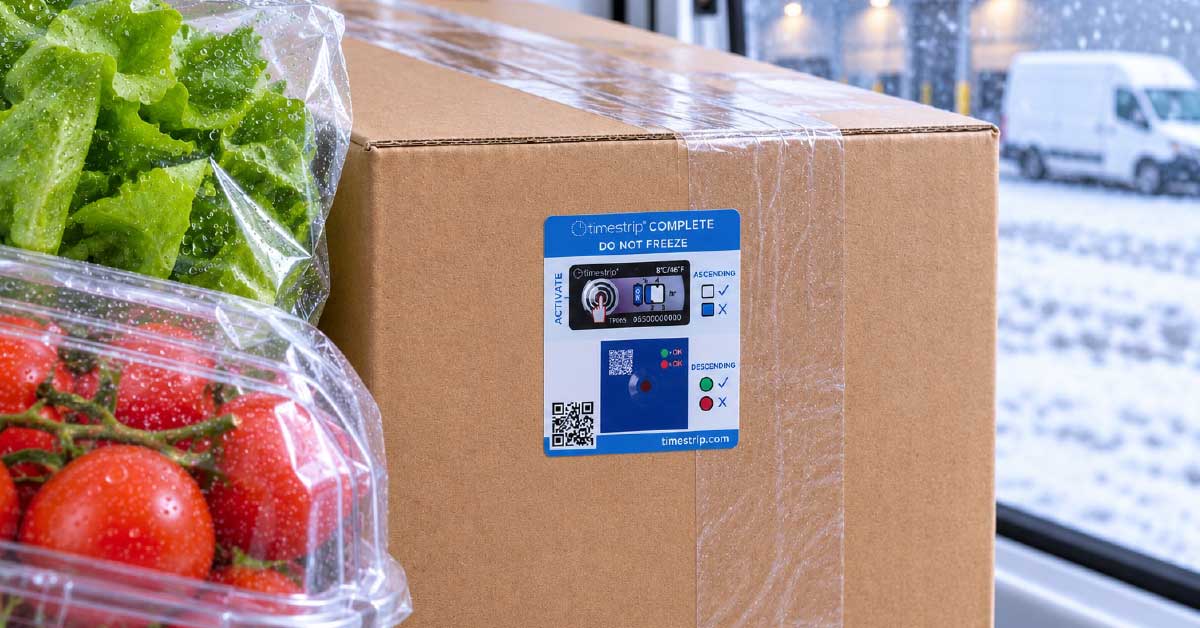
Timestrip® Complete temperature indicators are designed to monitor falling as well as rising temperatures, and provide a clear visual warning when a specified threshold is breached. When temperatures drop below the lower temperature threshold limit, an instant colour change to red appears, showing the product has been exposed to freezing temperatures. This makes it easy for warehouse personnel, transport operators and receiving teams to identify a potential problem without specialist equipment or training.
Because the indicators can be attached to or incorporated within product packaging, they provide a practical way of monitoring individual consignments, pallets or batches throughout their journey, an important consideration since fridges and vehicles may have their own temperature gradients.
Five Practical Benefits of Freeze Monitoring in the Food Supply Chain
Using Timestrip indicators can help food and beverage businesses improve temperature management in several ways:
- Protect product quality: Identify shipments exposed to potentially damaging low temperatures before products reach retailers or consumers.
- Improve goods-in checks: Give receiving staff an immediate visual indication of whether a consignment may have experienced a temperature breach.
- Reduce unnecessary waste: Identify affected batches so that inspection and corrective action can be targeted, rather than automatically rejecting an entire delivery.
- Strengthen supplier accountability: Provide visible evidence of temperature exposure, helping businesses investigate transport or storage problems and resolve disputes.
- Improve quality assurance: Support existing cold-chain procedures with an additional, easily understood monitoring measure.
Indicators can be deployed at different points in the distribution network, from dispatch and refrigerated storage to transport and final delivery. This helps suppliers identify where problems are occurring and take steps to prevent them recurring.
Winter Planning Priorities for Food and Beverage Suppliers
The time to prepare for winter temperature risks is before the first serious cold snap, not after a shipment has been damaged.
Food and beverage suppliers should review their existing temperature-control procedures, identify products particularly vulnerable to freezing or chilling injury, and consider where additional monitoring would provide reassurance.
Particular attention should be paid to overnight transport, external loading areas, unheated warehouses and deliveries travelling through regions experiencing significantly different weather conditions.
Incorporating Timestrip temperature indicators into packaging and distribution procedures offers a simple, cost-effective way to strengthen protection. By providing a clear and irreversible warning when temperatures fall below an acceptable level, they help suppliers make better-informed decisions and protect the quality of goods throughout the winter supply chain.
A related article looks at winter cold chain monitoring for pharmaceutical and other temperature-sensitive products.