
Why Filter Change Indicators Save More Than Just Energy
Filters are essential to the efficient operation of HVAC, air-handling and industrial systems. They protect equipment, maintain air or water quality, and help systems operate as designed. But a filter can only do its job effectively for so long.
As filters become loaded with dust, particles, contaminants or other material, resistance to airflow or water flow increases. The result can be higher energy consumption, reduced system performance and, eventually, equipment problems.
This is why a well-managed filter maintenance schedule is about much more than simply replacing filters at regular intervals. It can help reduce operating costs, protect equipment, improve reliability and provide a more predictable maintenance regime. A simple filter change indicator can play an important role in making that process easier to manage.
The Hidden Cost of a Dirty Filter
Filter replacement is often viewed as a routine maintenance expense. However, leaving a filter in service for too long can create much greater costs elsewhere.
In a heating, ventilation, and air conditioning (HVAC) system, a progressively blocked air filter increases resistance to airflow. Fans and air-handling equipment may have to work harder to maintain the required airflow, potentially increasing energy consumption. At the same time, restricted airflow can affect temperature control and overall system performance.
Industrial filtration systems face similar challenges. Whether filtering air, process water or other fluids, increasing filter loading can reduce flow rates and put additional demands on pumps, fans and other equipment.
The problem is that the filter's condition is not always obvious. A filter may look relatively clean from the outside while already having accumulated enough contamination to affect performance.
Why Scheduled Filter Replacement Matters
One approach is simply to replace filters at fixed intervals — for example, every three or six months. But this can result in filters being replaced either too early or too late.
Replacing a filter too early wastes the remaining useful life of the filter and increases consumable costs. Replacing it too late risks reduced performance and potentially higher energy and maintenance costs.
A better approach is to establish a filter maintenance schedule based on the actual application, operating conditions and expected service life of the filter. This is where a time-based filter indicator can provide a practical advantage.
How a Filter Change Indicator Works
A filter change indicator provides a simple visual reminder that a predetermined service period has elapsed.
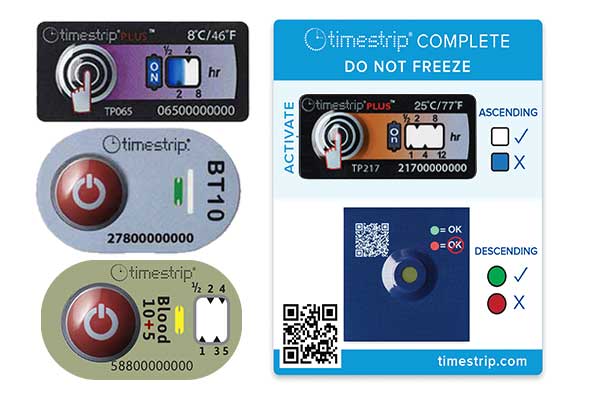
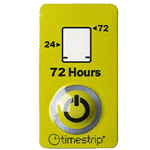
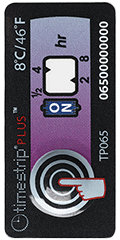
Timestrip® time indicators are designed to provide a clear indication of elapsed time. Once activated, the indicator progresses over the specified period and provides a visual signal when the designated time has passed.
This can be particularly useful where filters have a recommended replacement interval and there is no convenient way for maintenance personnel to record or remember when a filter was installed. Instead of relying on handwritten labels, spreadsheets or memory, the indicator travels with the filter and provides an immediate visual reminder.
Making HVAC Filter Replacement More Predictable
HVAC systems are often distributed across large buildings, commercial facilities and industrial sites, with multiple air-handling units requiring regular servicing.
A dedicated HVAC filter replacement timer can make it easier for maintenance teams to identify when filters are due for replacement.
For example, an indicator can be activated when a new filter is installed. The maintenance team can then see at a glance whether the filter is still within its planned service period or has reached the point at which replacement is required. This can help simplify routine inspections, particularly where large numbers of filters are installed throughout a facility.
More importantly, it can support a proactive maintenance approach rather than relying on problems being identified after system performance has deteriorated.
Saving More Than Energy: Five Financial Benefits of Filter Change Indicators
Energy efficiency is an important reason for maintaining filters, but it is not the only financial benefit.
1. Lower Maintenance Costs
A predictable replacement programme makes maintenance easier to plan. Filters can be ordered in advance and replaced during scheduled service visits rather than requiring additional visits when a problem is discovered.
2. Reduced Equipment Wear
Restricted airflow or fluid flow can place additional demands on fans, pumps and other components. Keeping filters within their intended service period can help equipment operate under more appropriate conditions.
3. Fewer Unexpected Failures
A missed filter change may contribute to declining system performance and, in some applications, equipment faults. A visual indicator provides an additional reminder that can help prevent maintenance tasks from being overlooked.
4. Better Maintenance Planning
A clearly visible indicator allows maintenance personnel to identify filters approaching the end of their service period. This can make it easier to organise labour, replacement filters and access equipment in advance.
5. Improved System Performance
Filters are installed to protect the system and, in the case of air filtration, help maintain the desired indoor environment. Keeping them within their intended operating period supports consistent system performance.
Water Filter Replacement Reminders
The benefits of scheduled filter replacement are not limited to HVAC and air filtration. Water filtration systems also depend on filters being replaced at appropriate intervals. As a filter collects contaminants, flow resistance can increase and filtration performance can change.
This applies across a wide range of filter applications, from commercial water systems and drinking-water equipment to industrial process filtration.
A time-based filter change indicator provides a straightforward way of identifying when a filter has reached its planned service interval. For equipment with multiple filters or distributed filtration points, a visual indication can be particularly useful. Maintenance personnel do not necessarily need to consult installation records to determine when a filter was fitted; the indicator provides an immediate reminder.
How Time-Based Indicators Complement Pressure and Flow Monitoring
A time indicator does not necessarily replace pressure, flow or differential-pressure monitoring. In larger or more critical systems, those measurements can provide valuable information about the actual operating condition of a filter. However, the time factor provides a simple and predictable maintenance parameter.
In many applications, filters have a manufacturer's recommended service interval based on typical operating conditions. A time indicator can help turn that recommendation into a practical maintenance reminder. It can also provide a useful back-up where electronic monitoring is unavailable, impractical or unnecessarily complex.
A Simple Solution for Complex Filter Maintenance Environments
One of the advantages of a visual time indicator is its simplicity.
There are no batteries to replace, software to configure or electronic displays to interpret. The indicator provides a physical reminder directly at the point where the maintenance task needs to be carried out. For facilities managers and maintenance teams, this can help create a more consistent approach to filter servicing across multiple pieces of equipment.
It also helps make maintenance status visible to different members of a team, rather than depending on information being held by one individual.
Building a More Effective Filter Maintenance Schedule
An effective filter maintenance schedule should take account of the application rather than relying on a universal replacement interval.
Factors can include:
- Filter type and specification
- Air or water quality
- Operating hours
- Environmental conditions
- Contaminant loading
- System criticality
- Manufacturer recommendations
- Historical filter performance
Once an appropriate service interval has been established, a time indicator can provide a simple way to communicate that interval at the point of use.
For facilities with many filters, standardising replacement intervals and using visual indicators can also make routine inspections more systematic.
From Filter Replacement to Preventative Maintenance
The real value of a filter change indicator is therefore not simply the reminder to buy another filter. It is about turning an easily overlooked maintenance task into a visible, predictable part of a preventative maintenance programme.
For HVAC systems, this can contribute to efficient airflow and help avoid the consequences of excessively loaded filters. For water and industrial filtration, it can help maintenance teams manage replacement intervals and maintain consistent system operation.
And because filters are relatively inexpensive compared with the equipment they protect, timely replacement can be a cost-effective form of preventative maintenance.
A filter change indicator such as a Timestrip time indicator provides a simple visual cue that helps maintenance teams know when a planned service interval has elapsed. Used as part of a wider filter maintenance schedule, it can support better planning, reduce the risk of missed maintenance and help systems operate more reliably.
| VIEW TIME INDICATORS |
| CONTACT US |