Blood Temperature Excursion: What Happens After a Breach?
Blood and blood components are highly sensitive to storage and transport conditions. Maintaining the correct temperature throughout the blood cold chain is therefore a fundamental part of protecting product quality, patient safety and supply.
But what happens when something goes wrong? A refrigerator fails. A transport container is left open. A unit spends too long outside controlled storage. Or a delivery arrives and there is uncertainty about whether the required temperature has been maintained.
This is a temperature excursion blood event — and it triggers a process that should be based on evidence.
What Is a Blood Temperature Breach?
A blood temperature breach occurs when a blood component is exposed to conditions outside its specified storage or transport temperature range, or when the required conditions cannot be demonstrated.
For example, whole blood and red blood cells are generally stored at 2°C to 6°C. World Health Organization guidance stresses that blood and blood products must be maintained within their specified conditions because deviations can affect component viability, and may increase the risk of bacterial proliferation.
What Happens After a Blood Temperature Breach? A 5-Step Protocol
The precise procedure will depend on the blood component, the nature of the excursion and the organisation's validated standard operating procedures. However, a typical cold chain breach protocol follows a logical sequence.
1. Identify the Affected Product
The first priority is to establish which units may have been exposed.
Unique identification and traceability are fundamental requirements for blood establishments and hospital blood banks. UK regulations require systems capable of tracing individual blood donations and components:
“Blood establishments and hospital blood banks must retain a record of any serious adverse events which may affect the quality or safety of blood and blood components for a minimum of 15 years (regulations 7 and 9).”
The investigation needs to establish exactly which units were involved rather than simply treating an entire shipment or refrigerator as affected.
2. Quarantine the Affected Units
Potentially compromised blood should be prevented from being issued while the excursion is investigated. The unit's status needs to be clearly identified so that it cannot inadvertently return to normal inventory before an authorised decision has been made.
This is an important principle of blood quality systems: products that have not met the required conditions should remain segregated until their status has been determined.
3. Establish the Temperature History
This is where reliable temperature evidence becomes particularly important. A single temperature reading taken after the event may reveal the current temperature, but does not establish what happened to the blood during the excursion.
The investigation may need to establish how long the product was outside its permitted range, which individual units were affected, whether the excursion occurred during storage, transport or handling.
World Health Organisation (WHO) guidance identifies monitoring, measurement, documentation and indicators as important parts of managing the blood cold chain. Its guidance also specifically identifies time/temperature indicators among equipment used for blood transport (Iris).
While sophisticated data loggers are commonly found in such settings to provide comprehensive temperature history data, simpler and cheaper temperature indicators such as those from Timestrip® can be deployed in numbers at product level to provide a further safeguard. WHO guidance notes that:
“A time and temperature indicator is not intended to replace existing quality assurance measures for the safe transportation of blood components. It is a simple tool to assist personnel handling blood components to decide to use or discard a particular blood consignment. In this way, it contributes to the goal of increasing the safety of the global blood supply in line with WHO recommendations related to the blood cold chain.”
4. Assess the Evidence Against the Applicable Procedure
The responsible transfusion or quality team needs to assess the available evidence against the applicable storage requirements, validated procedures and component-specific criteria.
For example, UK guidance for red cells specifies procedures for units removed from 2–6°C controlled storage and subsequently returned. Where the specified time limits are exceeded, units may need to be returned to the transfusion laboratory or quarantined rather than simply being returned to normal refrigerator stock (Transfusion Guidelines).
The decision therefore needs to be based on the actual exposure and the approved procedure, rather than an assumption that a brief excursion has either made the product unsafe or had no effect.
5. Document the Decision
The investigation should leave an auditable record of what happened and why the final decision was made. Documentation, quality systems and traceability are integral to blood regulation.
The UK Blood Safety and Quality Regulations require hospital blood banks to maintain a quality system, validated processes and documentation that can be made available for inspection. The regulations also require systems for reporting serious adverse events that could affect the quality or safety of blood and blood components (Legislation.gov.uk).
How Temperature Indicators Provide Proof
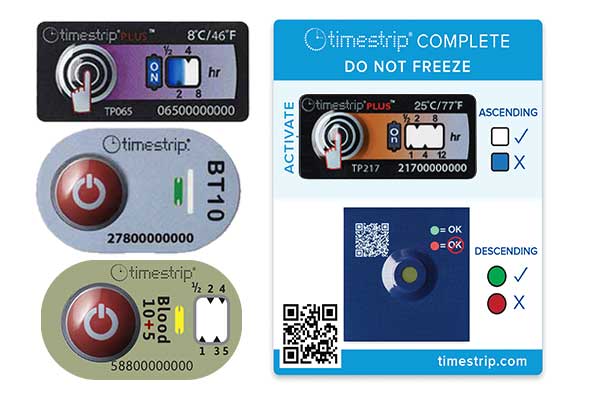
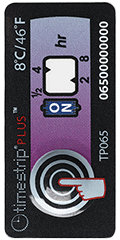
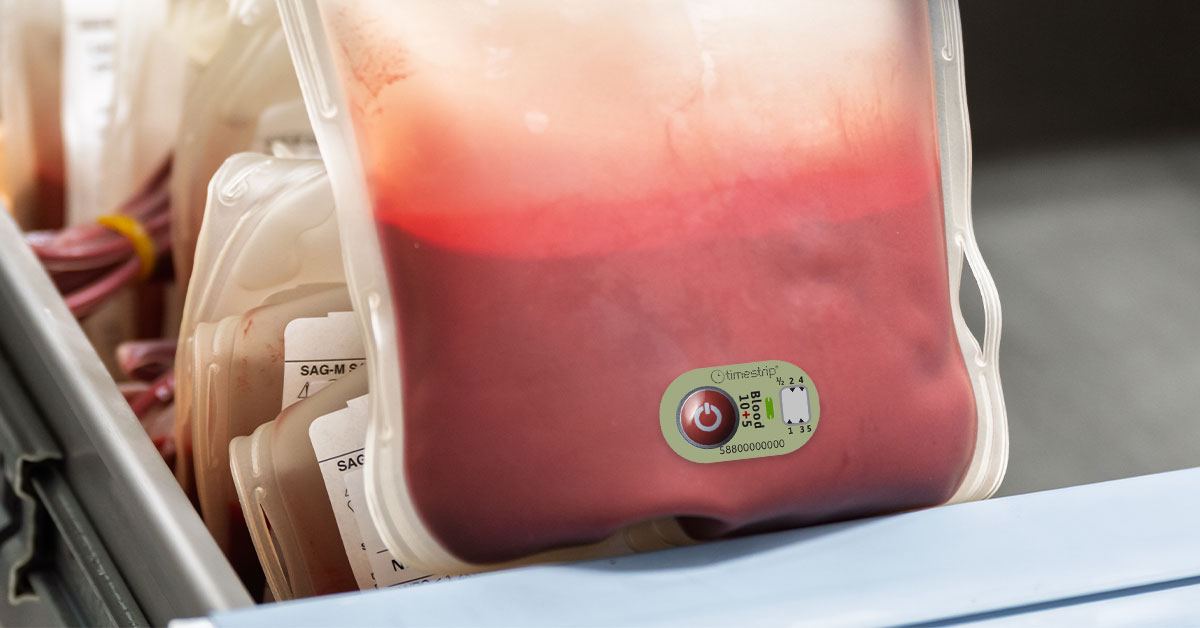
Timestrip non-reversible temperature-sensitive indicators are small, inexpensive labels that are attached directly to the blood bag. They monitor the core temperature of the blood bag and provide a visual colour change from white to blue if the product is exposed to temperatures outside the safe threshold.
Since they are non-reversible, they provide permanent evidence of a temperature excursion, even if the blood product was later re-cooled. For example, Timestrip's Blood Temp 10+ indicator shows the cumulative time for which a product has been exposed to 10°C or above (up to five hours).
This can be particularly valuable when blood products move through multiple stages of the cold chain. At dispatch, an indicator can provide evidence that the product started its journey under acceptable conditions. During transportation, it provides a means of detecting a temperature breach that may otherwise go unnoticed. At receipt, staff can check the indicator as part of the receiving procedure.
If the indicator has remained unchanged, there is evidence supporting the conclusion that the monitored threshold was not exceeded. If it has activated, the unit can be identified for investigation and appropriate quarantine. The indicator therefore becomes part of the evidence trail surrounding the blood component.
From Temperature Monitoring to Traceability
Modern blood cold-chain management is about being able to demonstrate that the required conditions were maintained, and being able to identify what happened when they were not. Timestrip time and temperature indicators can therefore perform an important role within a wider quality system.
They do not replace the organisation's SOPs, validated equipment or temperature monitoring systems. However, they can provide additional, product-level evidence from their travels with the blood component.
Protecting the Blood Cold Chain
From collection and processing through transportation, Timestrip temperature indicators provide a practical additional layer of protection by making temperature exposure visible at the level of the individual product or shipment.
To find out more about Timestrip's Blood Temp indicators and other temperature-sensitive applications, get in touch with the team.
| VIEW BLOOD TEMP RANGE |
| CONTACT US |