Fridge-Free Vaccines Are on the Way: Why Cold Chain Monitoring Still Matters Now
Vaccines save millions of lives every year, but only if they reach the point of care within a tightly defined temperature range. Ambient-stable vaccines could eventually change that equation. For now, temperature monitoring remains one of the most effective tools protecting vaccine efficacy worldwide.
A Room-Temperature Tetanus-Diphtheria Vaccine: What the Trial Means
Recent scientific advances are exploring ‘fridge-free’ vaccines that will allow vaccines, and potentially other medications, to be stored at ambient conditions. A recent trial to develop a room temperature tetanus-diphtheria vaccine offers promising long-term potential. By stabilising vaccines in a dry powder form, researchers aim to reduce dependence on refrigeration.
Why the WHO Says Half of All Vaccines Are Wasted
Currently, the majority of vaccines must be stored within tightly defined temperature ranges. Despite best efforts, the World Health Organization estimates that around half of all vaccines are wasted globally. A significant proportion of this loss is due to temperature excursions during storage and transport, whether vaccines become too warm or inadvertently freeze.
Today’s Reality: Most Vaccines Still Need Strict Cold Chain Control
While further progress on fridge-free vaccines is awaited, the reality today is that many therapeutics still depend on strict temperature control to remain safe and effective. From manufacture through to administration, maintaining the correct conditions is essential, and any deviation can render a product unusable.
Where the Vaccine Cold Chain Breaks: Remote Regions and Last-Mile Delivery
The challenge of maintaining the pharma cold chain remains particularly acute in remote regions, developing countries, and in emergency settings where refrigeration infrastructure is limited or unreliable. Even in well-developed healthcare systems, the final stages of delivery, from transport to clinics to point-of-use, present ongoing risks, a challenge explored further in our vaccine applications overview.
The Role of Temperature Indicators in Vaccine Cold Chain Monitoring
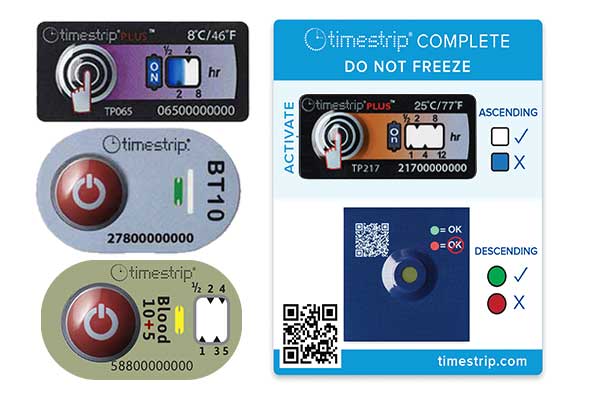
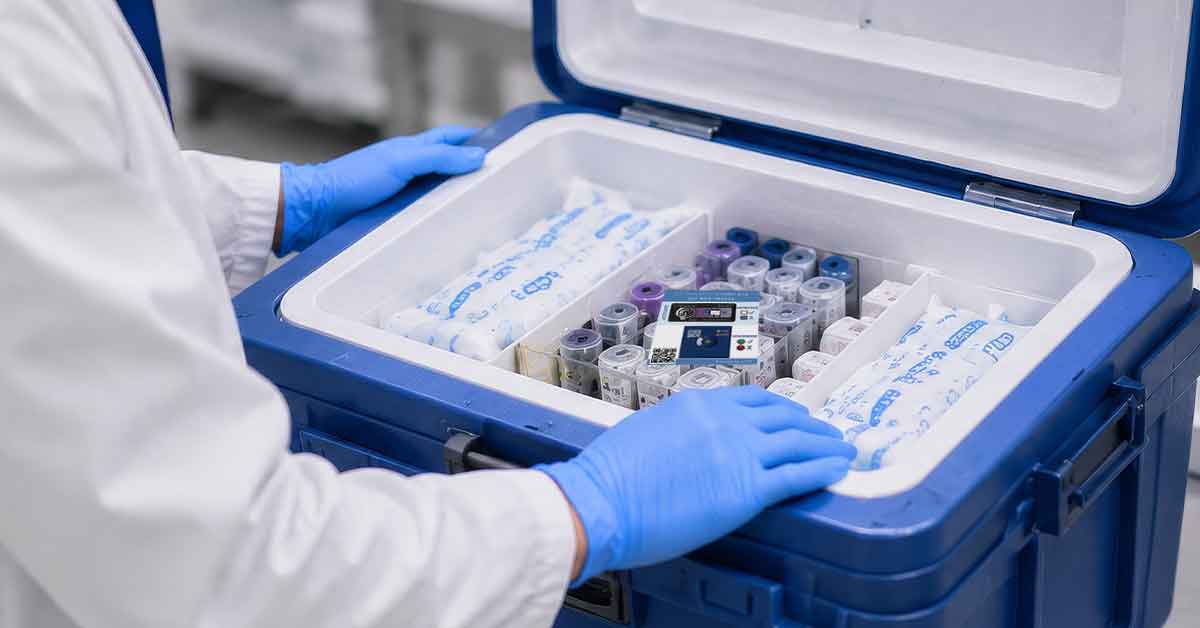
So, for the foreseeable future, effective monitoring remains essential to ensure vaccine integrity and patient safety. This is where real-time, easy-to-use temperature monitoring solutions play a critical role. Timestrip indicators are specifically designed to provide clear, visual alerts when temperature thresholds are exceeded. By offering an immediate and irreversible indication of a breach, they enable healthcare professionals and logistics teams to quickly identify compromised vaccines and take appropriate action.
Products such as Timestrip PLUS monitor ascending temperature breaches, while Timestrip Complete combines ascending and descending monitoring on a single card, giving full coverage of the 2–8°C range most vaccines require.
Indicators vs. Data Loggers: Why Simplicity Wins for Vaccine Logistics
Unlike complex electronic systems such as data loggers, Timestrip indicators are simple, reliable and cost-effective, making them suitable for use across the entire supply chain, from refrigerated storage to last-mile delivery in challenging environments.
Conclusion: Monitoring Matters Until the Cold Chain Itself Disappears
As the industry continues to innovate towards more temperature resilient vaccines, the need for dependable monitoring solutions remains unchanged. Ensuring that vaccines are stored and transported within safe limits is not just a logistical requirement, it is fundamental to protecting efficacy, reducing waste and ultimately safeguarding global health.
For a deeper look at how Timestrip's range supports the vaccine cold chain, see our Comprehensive Guide to Time & Temperature Monitoring.